Automation Machine Design Services
We design automated and semi-automated machines around your production requirements, from concept development and mechanical design to detailed CAD and manufacturing documentation.


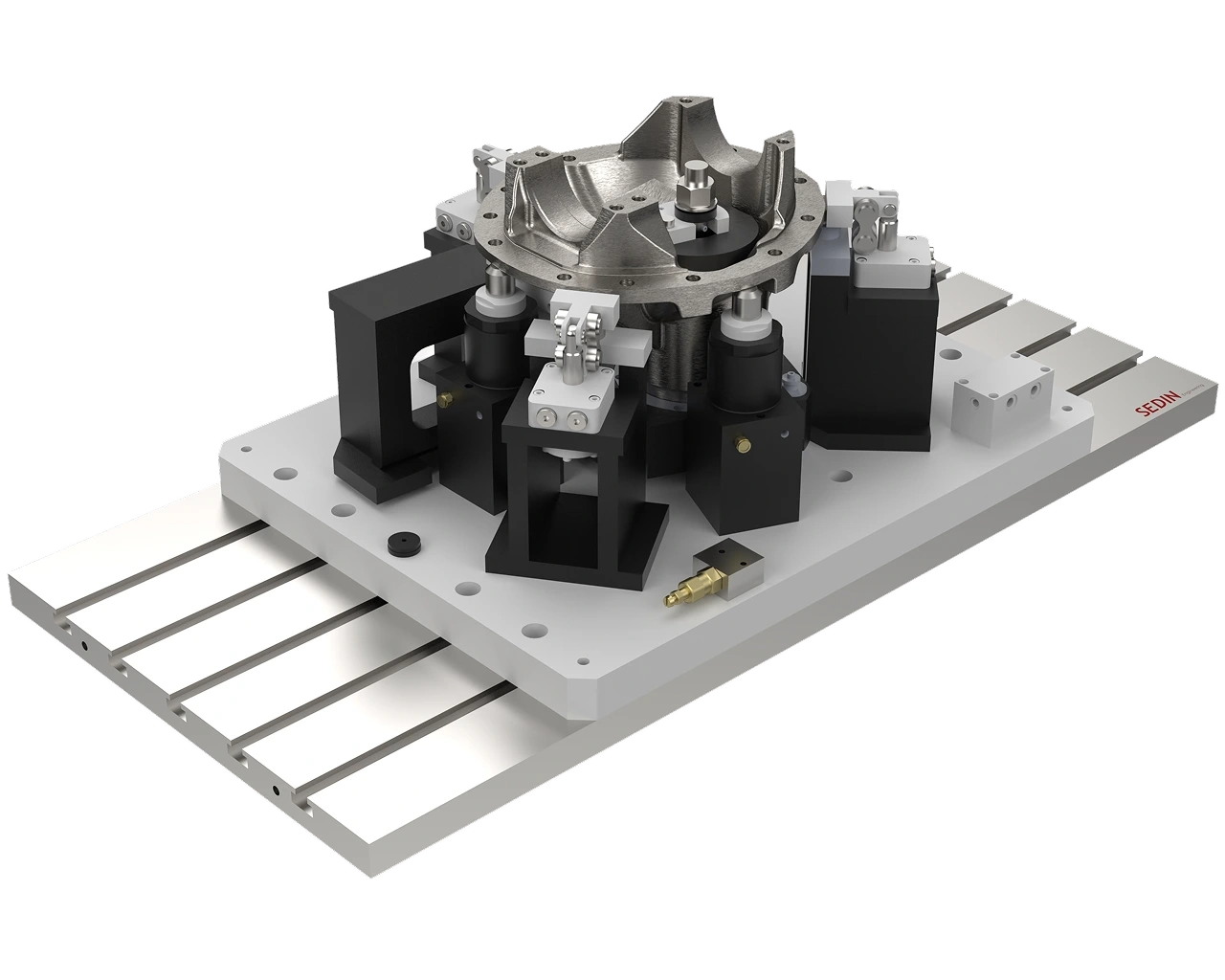
Custom Automation Machine Design
Manufacturers often need equipment designed around a specific process, product, cycle time or production constraint. Standard machines may not provide the flexibility, throughput or integration required.
Our custom automation machine design services help manufacturers, OEMs and system integrators develop automated and semi-automated equipment for assembly, material handling, welding, testing, inspection, packaging and other production applications.
We take your machine from concept and layout to detailed design, validation and manufacturing documentation. Our engineering scope includes:
- Machine concept and layout
- Mechanical design and 3D CAD
- Machine mechanisms and assemblies
- Design validation and simulation
- Manufacturing and fabrication drawings
- BOMs and assembly documentation
Automation Machines We Design
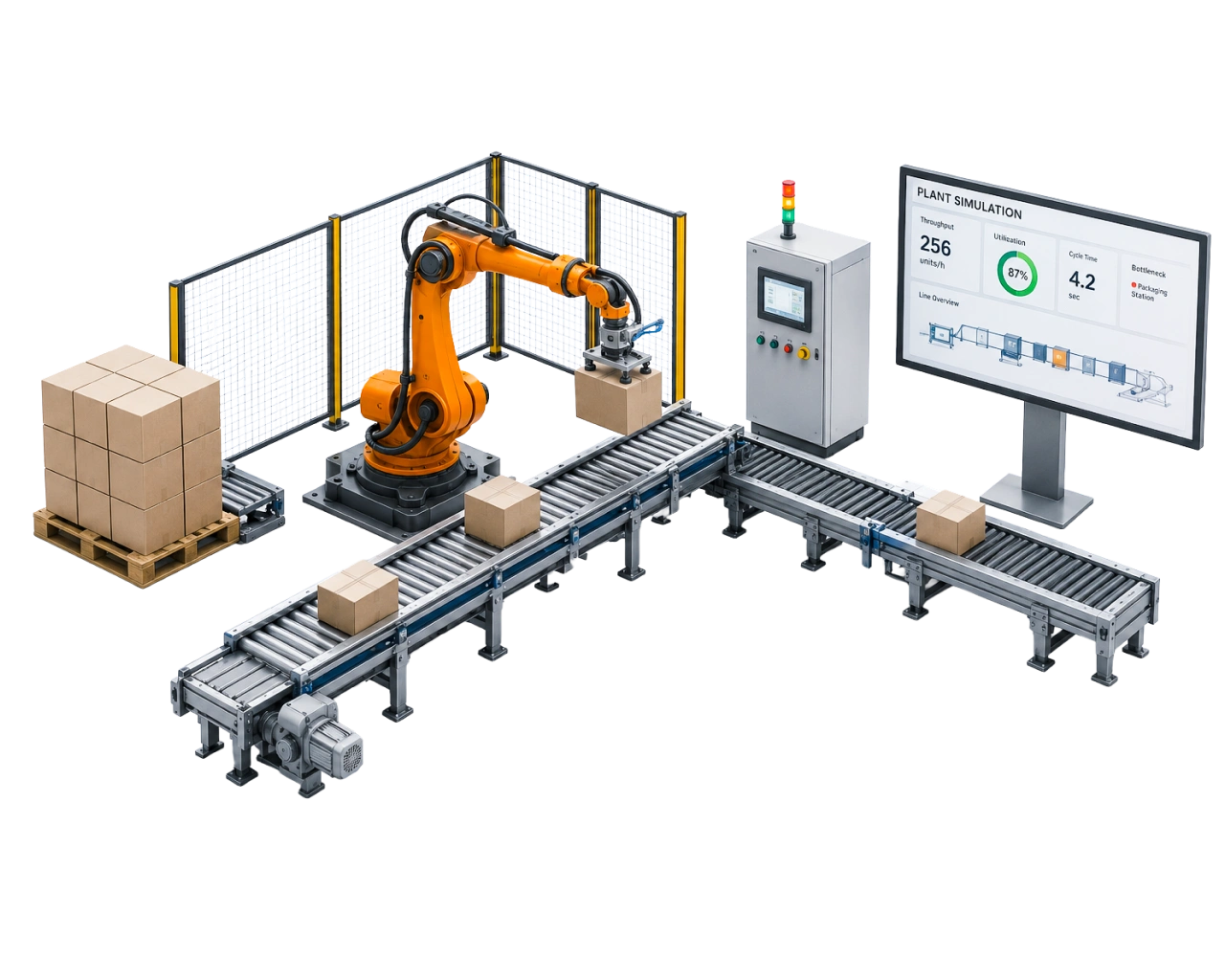
Every production process has different automation needs. We design custom automated machines for specific production tasks, from assembly and robotic operations to inspection, testing and specialized manufacturing processes.
We design automated assembly lines based on actual production requirements like production flow, cycle time targets, workstation layout, part movement and integration with other machines and production lines.
Our design engineers also focus on operator accessibility, maintenance ease, safety, changeover efficiency and future scalability to help keep production running smoothly day after day.
Applications include multi-station assembly lines, indexing dial systems, pick-and-place assembly systems, press-fit and torque assembly stations, dispensing and bonding stations and semi-automatic operator assist workstations.


How We Design Your Industrial Automation Machinery
We follow a structured engineering approach to develop custom automated machine design around your production requirements. From process review and mechanical conception to detailed design and manufacturing documentation, each stage focuses on functionality, manufacturability and reliable machine operation.
Step 1: Requirement analysis
The process starts with understanding your production workflow, part details, cycle time targets, floor space, operational constraints and integration requirements before design work begins.
Step 2: Mechanical concept design
We develop machine concepts, layouts, and automation approaches based on your application, workflow and production goals. Where required, multiple concepts are reviewed before moving into detailed design.
Step 3: 3D CAD design & engineering
Complete 3D CAD models, machine assemblies and detailed component designs are developed to resolve motion paths, clearances, maintenance access and integration points before manufacturing begins.
Step 4: Design validation
We validate designs for manufacturability, functionality and assembly early in the development process. Machine motion, cycle sequences and critical design parameters are reviewed to identify potential issues before production. We apply Design for Manufacturing (DFM) principles to simplify fabrication, reduce costs, and improve reliability.
Step 5: Manufacturing documentation
Manufacturing-ready documentation is prepared, including fabrication drawings, assembly drawings, BOMs, weld details and engineering documentation required for manufacturing and integration.
Benefits of Custom Automation Machine Design
A well-designed automation machine helps improve production efficiency, reduce manual work, support consistent output quality, and make day-to-day manufacturing operations more reliable.

Designed around your process
Custom machines are developed around your product, production requirements, cycle time and operating conditions.
Shorter cycle times
Machines designed around your specific process eliminate the compromises that inflate cycle time in adapted standard equipment.
Better production consistency
Automated processes support repeatable operations and more consistent output across production cycles.
Lower cost per unit
Automated, consistent operations reduce labour dependency and rework rates across shifts.
Reduced downtime
Machines engineered for your environment, duty cycle, and maintenance access run more reliably than repurposed general-purpose equipment.
Long-term scalability
Machines can be designed with future capacity, product variants and process changes in mind, making later updates easier.
Technologies We Use
AUTOCAD * SOLIDWORKS * AUTOCAD ELECTRICAL
PTC CREO * INVENTOR * E-PLAN
FANUC ROBOGUIDE * AUTODESK VAULT * SOLIDWORKS PDM
ALLEN BRADLEY * DASSAULT DELMIA * VENTION
3D EXPERIENCE * FACTORY TALK * SIEMENS TECHNOMATIX
MITSUBISHI ELECTRIC * SCHNEIDER ELECTRIC * SIEMENS AUTOMATION
ABB ROBOSTUDIO * CODE SYS * B&R
GE DIGITAL * KAWASAKI * MOTOMAN
OMRON * KUKA SIM
Industries We Serve

AUTOMOTIVE

INDUSTRIAL AUTOMATION

PACKAGING

FOOD & BEVERAGE

METAL FABRICATION

AGRICULTURE

MATERIAL HANDLING

DAIRY PRODUCT MANUFACTURING

MANUFACTURING

HEAVY MACHINERY

MEDICAL

ENTERTAINMENT

WAREHOUSE
Industrial Standards
Frequently Asked Questions
Automation Machine Design Services FAQs
Related Engineering Services