3D Modelling Services for Plant Engineering
We design accurate, clash-free, and construction-ready 3D models, translating complex process requirements into standards your project demands.


Comprehensive 3D Modelling & Design


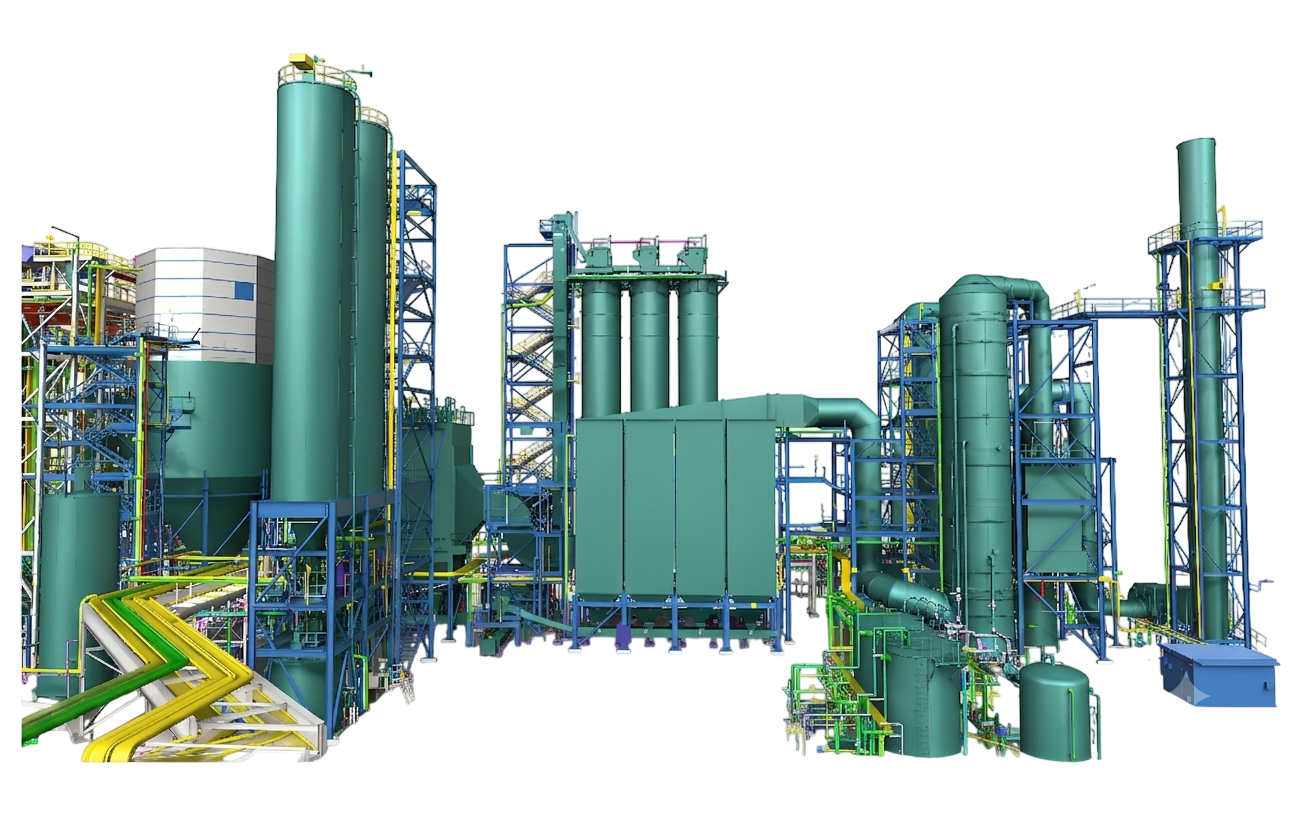
We provide 3D modelling services for process plants, oil refineries, water treatment plants, fire water systems, and industrial manufacturing facilities. Every model we design is engineered to support fabrication, operation, construction, and maintenance.
Every design decision we make in the model is tested for safe and practical installation.
We offer a comprehensive range of services to help plants and industrial facilities function efficiently:
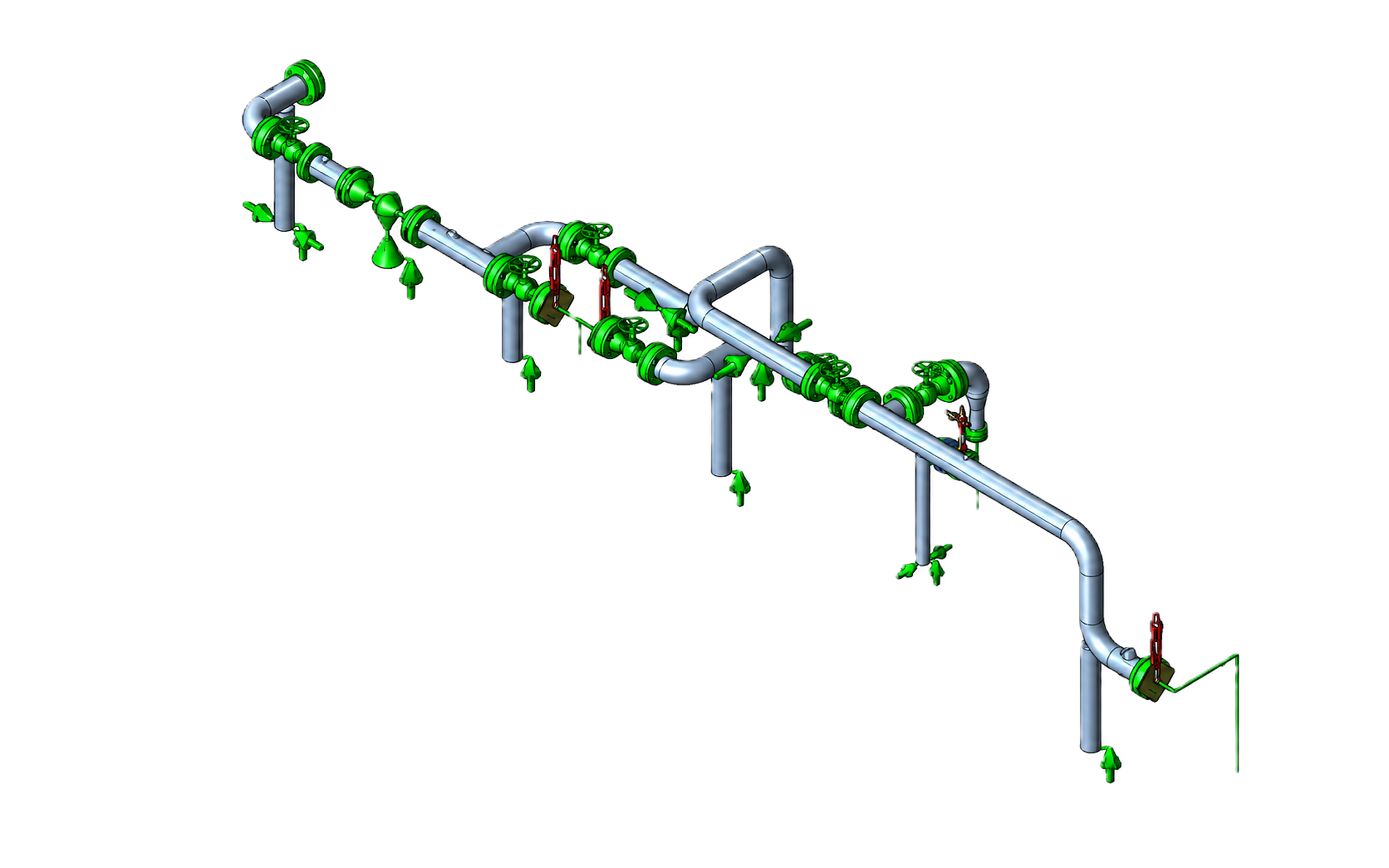
- Complete 3D pipe routing aligned with P&IDs, sketches, stress analysis outputs.
- Extraction of Piping GA drawings, piping layouts, plot plan, and piping Isometric drawings at every stage.
- Modelling pipe supports and systems for efficient fabrication and construction.
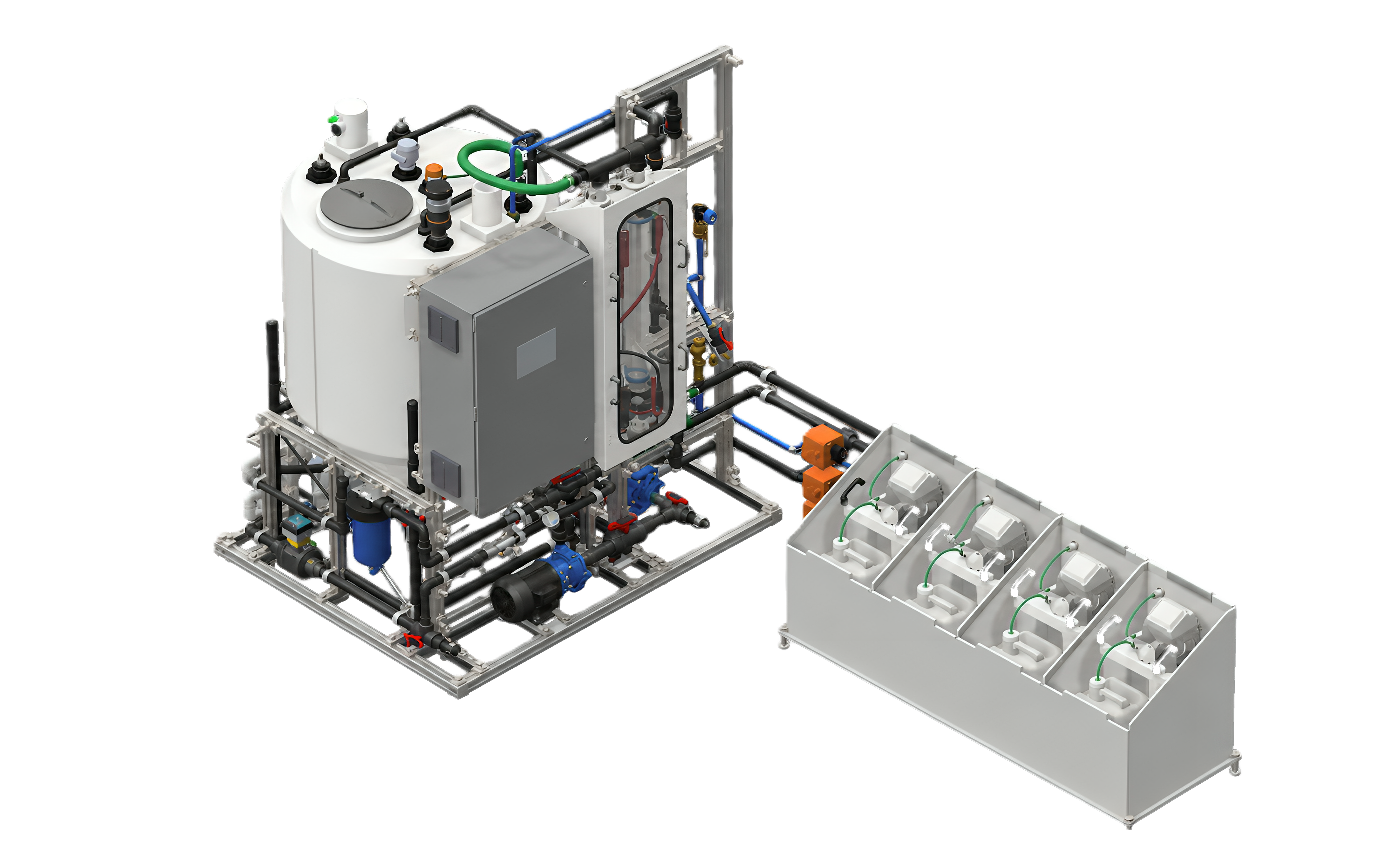
- Accurate placement and modelling of vessels, heat exchangers, pumps, and skids.
- Replicating GA drawings, Isometrics and 2D drawings from vendor data.
- Tracking, reviewing, and resolving design issues using Navisworks.
Deliver Accurate and Buildable 3D Models


Our 3D models capture and envision every functional and physical element.
The designs undergo in-depth evaluation not only for geometric correctness, but also for practical installation. We thoroughly review pipe stress analysis, clash resolution, and fabrication detailing, so the model can actually be built safely and on schedule.
We follow a step-by-step approach to ensure success in precise modelling.

Design Conceptualisation
Study project inputs—equipment datasheets, structural and civil inputs, client standards—and understand design intent before modelling.
Positioning and Routing
Design pipe routes using P&ID logic, follow guide positions and equipment positions. Prioritise large-bore, primary, and critical lines when establishing the plant layout.
Multi-Discipline Coordination
Coordinate across engineering disciplines—civil and structural, electrical, instrumentation and control—to model foundations, pipe racks, beams, and platforms.
Review Stages
A structured 30%, 60%, and 90% review process progressively refines and locks down the design, ensuring it is clear for construction or fabrication.
Generating Deliverables
Provide fabrication-ready documentation by extracting General arrangement drawings, Isometrics, BOM and MTO reports from the 3D model.
Optimise Plant Layout through 3D Modelling


Plant engineering projects can encounter model-related challenges that cause schedule delays and time-based cost inflation. Our framework is specifically designed to prevent them.
Here are some ways we optimise piping system layouts through 3D modelling:
- Resolve pipe clashes, equipment interference, and access issues and other discrepancies using Navisworks and AVEVA E3D.
- Validate support positions, structure, and equipment design for physical installability, identifying constraints that clash detection alone cannot reveal
- Synchronise P&IDs and 3D models through parallel review cycles, ensuring coordination from process design to physical model.
- Consider real plant operating conditions—temperature, pressure, fluid velocity—when selecting pipe materials and finalising design specs.
- Maintain accessibility, slope, and stress requirements while routing pipes through dense equipment zones, pipe racks and structural frames.
Efficient 3D Pipe Layout and Routing


3D models of pipe routes provide clear visual insights into the piping network, supporting better facility management throughout its lifecycle.
All complexities of construction and operation can be solved during the initial design phase. A single 3D model can replace fragmented data flows, minimising avoidable expenses and manpower.
Benefits of our 3D pipe models include:
- Rather than relying entirely on manual design, we use Plant 3D and AVEVA E3D to ensure consistency in design quality.
- Our 3D models serve as reliable references, requiring fewer modifications, reducing rework, and optimising overall project costs.
- The models act as a shared reference for connecting engineers, fabricators, and contractors, enabling collaboration and improving decision-making.
- Precise modelling translates to accurate engineering deliverables and fewer errors during construction.
- The models provide accurate visualisation of plant layout and piping networks ensuring adequate access for maintenance, inspection and operation.
Technologies we use
AUTOCAD * AVEVA PDMS / E3D * SOLIDWORKS
INVENTOR * AUTODESK REVIT * NAVISWORKS
ACC COLLABORATE PRO * CAESAR II
Industries we serve

OIL & GAS

POWER

WATER TREATMENT

PETROCHEMICAL

PAPER & PULP

RENEWABLES

FOOD & BEVERAGE

REFINERY
Industrial Standards
Frequently Asked Questions
3D Modeling Services for Industrial Plants FAQs
Related Engineering Services