Industrial Automation
Material Handling Systems: Types and Applications Across Industries

By Alex A
Head of Engineering


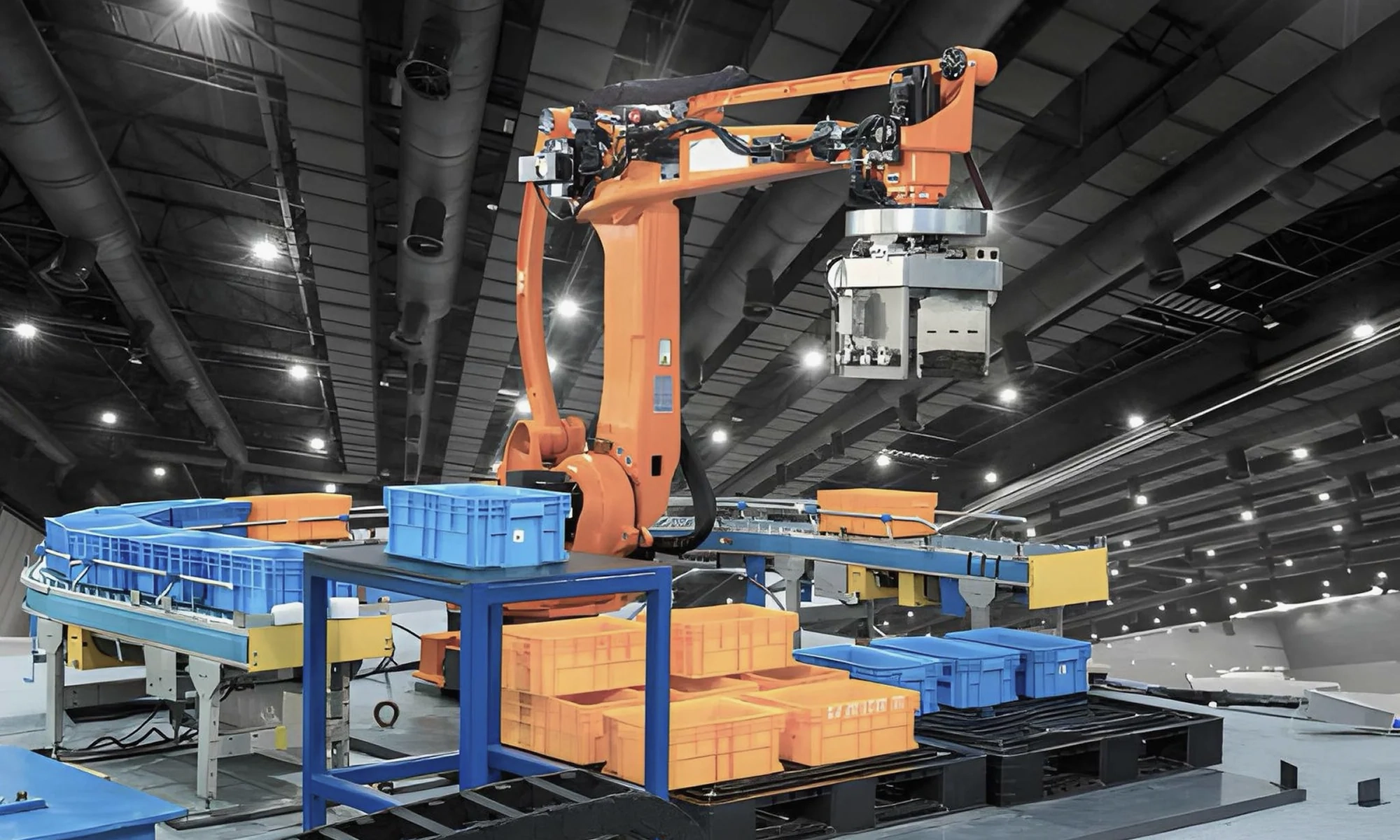
Material handling systems keep materials, components and products moving across manufacturing facilities, warehouses and processing plants. But moving materials efficiently takes more than conveyors and handling equipment. It requires the right combination of equipment, robotics and control systems to keep operations running smoothly.
From automotive assembly lines and food processing plants to pharmaceutical cleanrooms and automated warehouses, each industry has unique handling challenges. This blog explores the different types of material handling systems, their applications across industries, and the key factors to consider when selecting the right system.
What are material handling systems?
Material handling refers to the movement, storage, protection and control of materials throughout manufacturing, processing and distribution operations. It covers everything from raw materials and components to work-in-progress and finished products.
Material handling systems use a combination of equipment and technologies to move materials between processes. These may include conveyors, hoists, robotic arms and automated storage systems. Depending on production needs, material flow and the level of automation required, systems can be manual, semi-automated or fully automated.
Types of material handling systems and equipment
Material handling systems use different types of equipment to move, store and manage materials within a facility. The right choice depends on the material being handled, required throughput, available space and the level of automation needed.
1. Conveyor systems
Conveyors move materials, components and finished products along a defined path. Common types include belt, roller, chain and overhead conveyors. They are widely used in production lines, packaging facilities and warehouses to maintain a steady flow of materials between operations.
2. Robotic material handling systems
Robots automate repetitive handling tasks like picking, placing, loading, unloading and transferring components. Articulated robots, gantry robots and collaborative robots (cobots) are used depending on the task, payload and working area. These systems are common in automotive assembly, machine tending, packaging and manufacturing operations.
3. Automated Guided Vehicles (AGVs) and Autonomous Mobile Robots (AMRs)
AGVs and AMRs transport materials between workstations, storage areas and production lines. AGVs follow predefined routes or guidance systems, while AMRs use onboard sensing and navigation to adapt to changing conditions. Their suitability depends on route requirements, payload, facility layout and traffic conditions.
4. Automated Storage and Retrieval Systems (AS/RS)
AS/RS solutions automatically store and retrieve materials, components and finished goods. They may use storage cranes, shuttles, lifts and associated control systems to access designated storage locations. These systems are quite useful when facilities need to improve storage density, manage inventory movement or handle frequent retrieval requests.
5. Lifting and vertical material handling equipment
Cranes, hoists, industrial lifts and vertical conveyors move heavy loads or transfer materials between floor levels. They are used in manufacturing plants, assembly facilities, warehouses and heavy engineering operations. Equipment selection depends on load capacity, lifting height, movement frequency, available space and safety requirements.
6. Sorting and pallet handling systems
Sorting systems direct products to specific destinations based on factors like size, barcode, or order requirements. Palletizing systems arrange products or packages onto pallets, while depalletizing systems remove them. These operations may combine conveyors, sensors, robotic equipment and Programmable Logic Controllers (PLCs) to coordinate product movement and handling sequences.
7. Bulk material handling systems
Bulk handling systems move large quantities of loose materials, including grains, powders, minerals and aggregates. Common equipment includes screw conveyors, bucket elevators, belt conveyors and pneumatic conveying systems. The choice depends on material characteristics, required flow rate, conveying distance, dust control and operating conditions.
| System type | Common application | Key selection factor |
|---|---|---|
| Conveyors | Production lines and packaging | Throughput and transfer points |
| Robotic handling | Picking, machine tending and palletizing | Payload, reach and cycle time |
| AGVs and AMRs | Transport between workstations | Route flexibility and traffic |
| AS/RS | Automated storage and retrieval | Storage density and retrieval demand |
| Cranes, hoists and lifts | Heavy loads and vertical movement | Load capacity and lifting height |
| Sorting and pallet handling | Order fulfilment and product distribution | Sorting rate and handling requirements |
| Bulk handling equipment | Moving grains, powders and minerals | Material properties and flow rate |
These material handling equipment categories can operate independently or work together as part of an integrated system. For example, a warehouse may combine conveyors, robotic palletizing, automated storage and PLC-based controls to coordinate the movement of goods.
Material handling systems across industries
Different industries handle different types of materials, products and production volumes. A system designed to move heavy automotive components may not suit a food processing line or a pharmaceutical cleanroom. Choosing the right equipment depends on what needs to be moved, how it moves through the facility and the conditions it must operate in.
Let's look at the material handling systems commonly used across industries and what to consider when selecting and integrating them.
1. Automotive manufacturing
Automotive plants use material handling systems to move body panels, engine components, chassis, and assemblies between production stations. Conveyors carry parts along assembly lines, while transfer units move components from one workstation to another. Industrial robots also play an important role in loading machines, positioning parts, and transferring components for welding or assembly.
The equipment must suit the component weight, production volume, cycle time, and positioning accuracy required. For automated manufacturing lines, sensors and PLCs coordinate equipment sequences and transfers between stations. This helps keep different production stations working in sync.
2. Food and beverage processing
Food and beverage facilities handle raw ingredients, containers, products and packaged goods throughout processing and packaging operations. Belt conveyors move products along production lines, while screw conveyors and bucket elevators transport bulk materials such as powders, grains, and granules.
Choosing the right equipment depends on the material being handled, the required flow rate, and cleaning requirements. For food-contact applications, hygienic design and easy cleaning are important. Conveyors can also connect filling, inspection, packaging and palletizing equipment to keep the production line moving.
3. Medical device and pharmaceutical manufacturing
Medical device and pharmaceutical facilities move components, trays, packaging materials, and finished products between assembly, inspection and packaging stations. Depending on the process, conveyors, automated transfer systems, and robotic handling equipment can move materials between these stages.
Cleanroom environments add another layer of requirements. Equipment must suit the required cleanliness classification and minimize particle generation. Product sensitivity and contamination risks also influence how materials are handled. Automated transfer systems can help move products between production stages while maintaining the required environmental conditions.
4. Warehousing and distribution
Warehouses and distribution centers handle goods through several stages, from receiving and storage to picking, sorting, packing and shipping. Conveyors move cartons and packages, while automated storage and retrieval systems (AS/RS) manage stored goods. Automated guided vehicles (AGVs) and autonomous mobile robots (AMRs) transport materials between different work areas.
The right combination depends on order volumes, product dimensions, storage requirements and facility layout. Conveyors and sorters work well along fixed material flow paths, while mobile robots offer more flexibility when goods need to move between different locations. In larger facilities, handling equipment can also connect with warehouse control and management systems to coordinate material movement with inventory and order requirements.
5. Electronics and semiconductor manufacturing
Electronics manufacturers use PCB conveyors, component feeders, and robotic handling systems to move printed circuit boards (PCBs) and components between assembly and inspection stations. Semiconductor manufacturing involves more specialized equipment, including wafer handling robots and automated transfer systems that move wafers and wafer carriers.
These applications require careful control over how products are handled. Depending on the process, equipment may need to support precise positioning, electrostatic discharge (ESD) protection, vibration control and particle contamination prevention. Product sensitivity, handling accuracy and environmental conditions all influence equipment selection.
6. General manufacturing and heavy engineering
General manufacturing and heavy engineering facilities handle a wide range of materials, from small machined components to large fabricated structures and heavy assemblies. Conveyors and transfer carts move components between workstations, while cranes and hoists handle loads that are too heavy or bulky for convntional conveying equipment. Some applications also require custom handling mechanisms to accommodate unusual dimensions or specific positioning needs.
Equipment selection depends on load weight, dimensions, travel distance, movement frequency and available space. Heavy-load handling also requires attention to structural capacity, stability and safe operation. When materials need to move between production stages frequently, automated equipment can handle these transfers and reduce manual work.
How does automation improve material handling systems?
Choosing the right equipment is only one part of an effective material handling system. Conveyors, robots and other machines must work together in the right sequence. They also need to respond when products arrive late, a station becomes occupied, or a machine stops unexpectedly.
Industrial automation helps coordinate these activities, keeping materials moving smoothly between operations.
1. Keep materials moving with conveyor automation
Automated conveyor systems control how products move between workstations. Sensors detect when a product arrives, while control logic determines when it can move to the next stage.
For example, if a packaging station is temporarily occupied, the system can hold incoming products in an accumulation zone until the station is ready. This helps prevent congestion at transfer points and keeps the production line moving.
2. Coordinate robotic operations with other equipment
Robots can pick, place and transfer components at a consistent pace. But they must also coordinate with the machines and equipment around them.
Before a robot picks up a component, the system may need to confirm that the part is correctly positioned and the receiving station is ready. The robot controller, PLC and sensors exchange signals to coordinate these actions. This helps ensure that each operation takes place at the right time and in the correct sequence.
3. Control equipment sequences with PLC programming
PLCs manage the sequence of operations across automated equipment. They receive signals from sensors, check programmed conditions, and control devices like motors, actuators and transfer mechanisms.
For instance, a PLC can prevent a conveyor from releasing a product until the next station is ready. It can also trigger an alarm or stop the equipment when a sensor detects a fault or a jam occurs. This allows the system to respond based on predefined operating conditions.
4. Track products and improve handling accuracy
Automated systems need to know where products are, when they arrive, and sometimes what each product is. Sensors and identification technologies provide this information.
Photoelectric and proximity sensors detect products and confirm their positions. Barcode scanners and RFID readers identify items as they move through a facility. Machine vision can inspect product features, check orientation, or guide a robot during picking.
Together, these technologies help improve product tracking, positioning, and handling accuracy. The right combination depends on the application and the level of accuracy required.
5. Monitor equipment and identify problems with HMI and SCADA
Operators need a clear view of equipment status to monitor operations and respond to problems. A human-machine interface (HMI) displays machine status, alarms and available controls, allowing operators to interact with the equipment.
Supervisory control and data acquisition (SCADA) systems provide broader monitoring across multiple machines or processes. In larger facilities, automation systems may also exchange information with warehouse control systems (WCS), warehouse management systems (WMS), or manufacturing execution systems (MES). This helps coordinate equipment activity with inventory, orders, and production schedules.
6. Improve operational safety and manage equipment faults
Automated equipment must operate safely, even when something goes wrong. Depending on the application and risk assessment, safeguards may include physical guards, interlocked doors, light curtains, emergency stops and safety-rated controls.
Automation also helps manage unexpected equipment faults. If a machine stops, related equipment may need to stop as well, incoming products may need to be held, or an alarm may need to alert the operator. Defined fault-handling and recovery sequences help prevent unexpected movements and allow operations to resume in a controlled manner.
What should you consider when choosing a material handling system?
The right material handling system depends on the materials being moved, the production process, and the facility's requirements. Consider these factors when selecting a system:
- Material type and load: Consider the material's weight, size, shape and fragility. Heavy components may require cranes or hoists, while smaller products may suit conveyors or robotic handling.
- Throughput requirements: Determine how much material the system must handle within a given time. Production volume and required cycle time help determine equipment capacity and operating speed.
- Facility layout: Consider the available floor space, distances between workstations, transfer points, and access for operators and maintenance.
- Level of automation: Decide whether manual handling, automated equipment, or a combination of both best suits the operation. Higher production volumes or repetitive tasks may benefit from automation.
- Integration with existing equipment: Check whether the system needs to work with existing conveyors, robots, machines, sensors and PLCs. Coordinated operation helps maintain a consistent material flow.
- Safety and maintenance: Account for load handling risks, machine guarding, operator access, and routine maintenance. Equipment and safeguards should suit the application and applicable safety requirements.
- Future production needs: Consider changes in production volume, product dimensions and process requirements. A system that can accommodate future changes may reduce the need for major modifications.
Improving material flow through automation
Choosing the right material handling system starts with understanding what needs to move, how often it moves, and how it fits into the production process. Equipment selection, facility layout and control system integration all influence how efficiently materials move between operations.
When these elements work together, manufacturers can reduce unnecessary material movement, improve process consistency and support changing production requirements.
Looking to improve material handling in your facility? Explore our industrial automation solutions to understand how automation and control systems can support your production requirements. Contact our team to discuss your project.
Related Blogs


Automation in Automotive Industry: Trends, Challenges and ROI in 2026
What’s driving automation in automotive manufacturing in 2026? From robotics to ROI, uncover key trends and challenges engineers must know.


Automated Packaging Systems for Modern Manufacturing
Tired of slow, manual packing? Discover how automated packaging systems help you pack faster, reduce errors, and save on labor costs.

BIW Fixture Design: From Concept to Manufacturing-Ready Drawings
Explore Body-in-White fixture types, design considerations and common challenges and solutions for accurate, efficient automotive assembly.